Ramen Guide
What is Tonkotsu Ramen?
It is arguably the most famous and beloved style of ramen in the world. But what exactly is tonkotsu, and why is that milky white broth so incredibly delicious?
The Meaning of "Tonkotsu"
In Japanese, "Tonkotsu" (豚骨) literally translates to "pork bones." Therefore, tonkotsu ramen refers specifically to the style of broth used in the soup, rather than the seasoning (like shoyu/soy sauce or shio/salt) or the toppings.
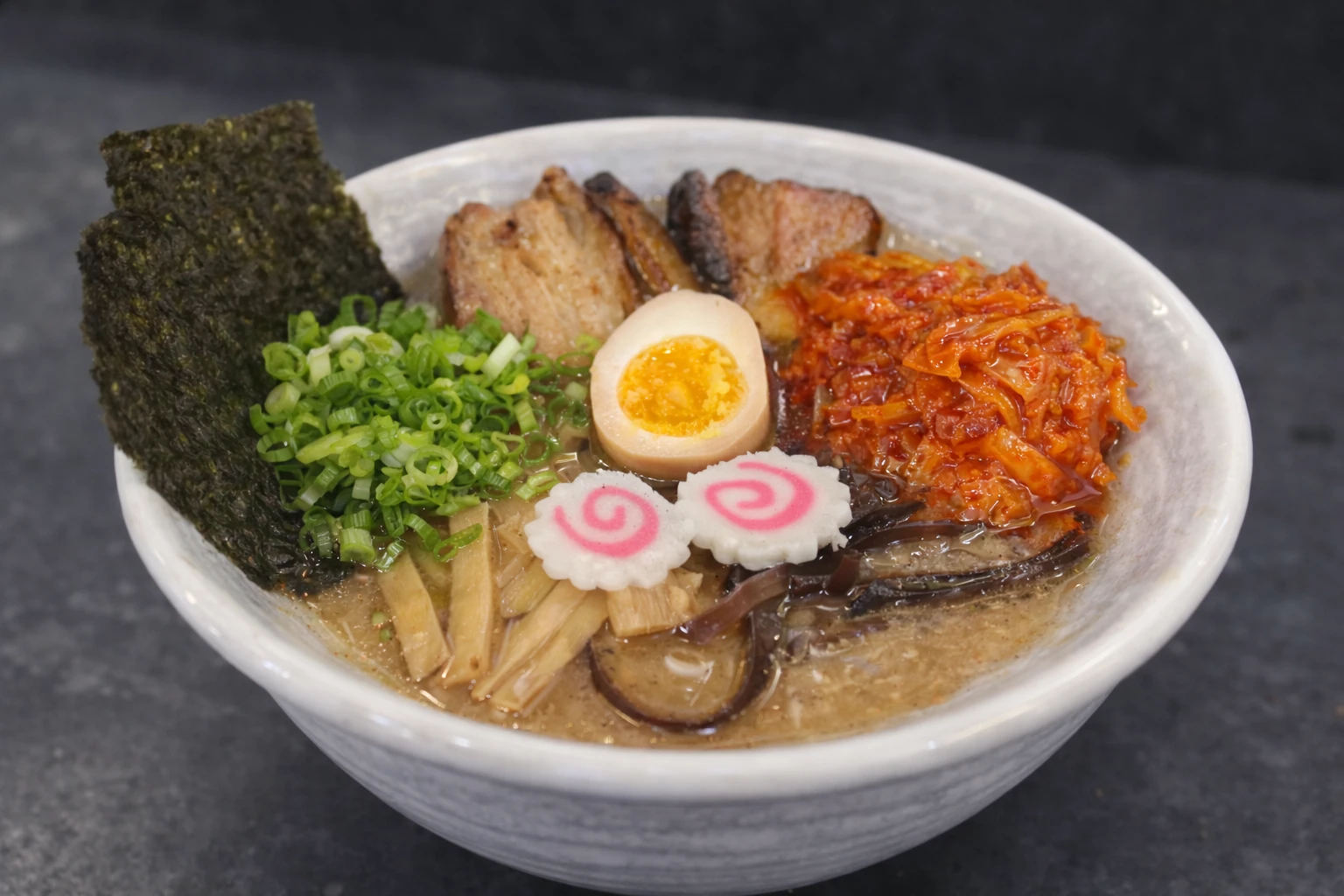
Originating from Fukuoka on the island of Kyushu in Japan, tonkotsu broth is instantly recognizable by its cloudy, milky-white appearance and extremely rich, sticky, and creamy texture.
How is it Made?
Unlike clear broths (chintan) which are gently simmered, tonkotsu broth (paitan) is boiled vigorously at high heat for many hours—often 12, 18, or even 24 hours.
This intensive boiling process emulsifies liquid fat with the massive amounts of collagen and marrow melting out of the pork bones. The result is a natural suspension that gives the soup its iconic creaminess, body, and profound umami depth without needing dairy or artificial thickeners.
Key Components of Tonkotsu Ramen
- 1
The Broth (Soup)
The gelatinous, rich pork bone base that defines the dish. It coats the noodles and leaves a delightful stickiness on the lips.
- 2
The Noodles
Traditionally served with very thin, straight, and hard noodles (katamen) that hold up well in the heavy broth.
- 3
Tare (Seasoning)
The salty base—often soy sauce (shoyu) or sea salt (shio)—mixed into the bottom of the bowl before the broth is poured.
- 4
Classic Toppings
Typically features Chashu (braised pork belly), Ajitama (soft-boiled marinated egg), Kikurage (wood ear mushroom), and fresh scallions.
Taste the Difference at Modu Ramen
At Modu Ramen in Jacksonville, Chef Kim uses an authentic 18-hour double-boiling technique to extract the purest, richest tonkotsu flavor possible. Come experience true Japanese culinary tradition.